
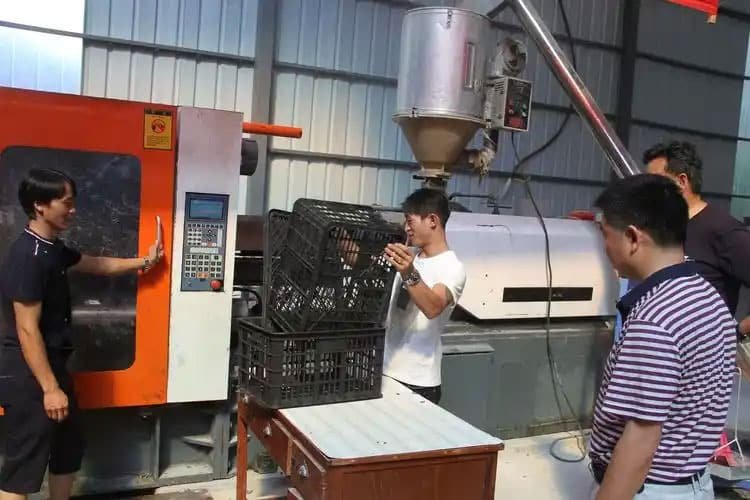
Why is a trial molding necessary?
The purpose of trial molding is to identify optimized process parameters and mold design. This ensures a stable and uninterrupted mass production environment even if factors such as materials, machine settings, or environment change, rather than simply obtaining a good sample.
Improper mold design often leads to various defects in the final product. Before modifying the mold, trial molding and evaluation should be conducted to optimize the mold design and process parameters. This usually achieves twice the result with half the effort and meets the high-quality requirements of mass production.
- Verify mold design
- Check product quality
- Optimize process parameters
- Identify defects early
- Reduce mass-production risk
- Save time and cost in production
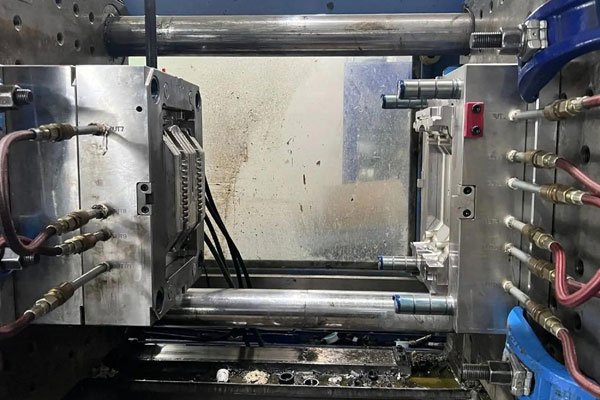
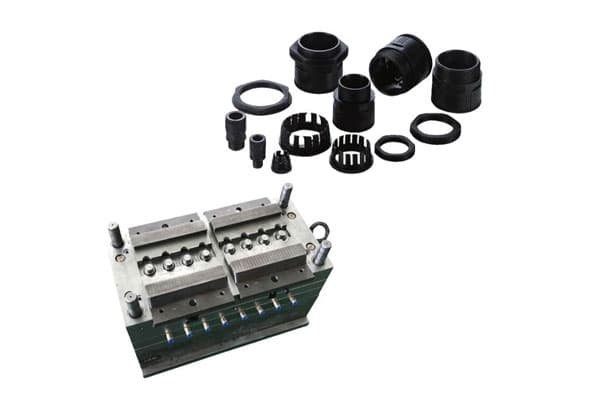
The general process of trial molding
Most defects in molded products occur during the plasticizing and injection molding stages, but sometimes they are also related to improper mold design. Possible influencing factors include: the number of mold cavities, the design of the cold/hot runner system, the type, location, and size of the injection port, and the product’s own structure. Therefore, to avoid product defects caused by mold design, we need to analyze the mold design and process parameters during mold making.
The general process of trial molding
Step 1. Set the temperature of the material hopper
It is important to note that the initial tank temperature setting must be based on the material supplier’s recommendations. This is because the same material from different manufacturers and of different grades can vary considerably, and material suppliers often have in-depth research and understanding of their own materials. Users can make basic settings based on their recommendations and then make appropriate fine-tuning adjustments according to specific production conditions.
In addition, a detector is needed to measure the actual temperature of the melt. Because the temperature we set in the tank often varies due to factors such as environment, the type and depth of the temperature sensor, etc., it cannot be guaranteed to be 100% consistent with the melt temperature. Sometimes, due to the presence of oil or other reasons, the actual temperature of the melt differs greatly from the set temperature in the tank (we have previously had examples where the temperature difference was as high as 30°C).
Step 2. Set the mold temperature
Similarly, the initial mold temperature setting must be based on the recommended value provided by the material supplier.
It’s important to note that the mold temperature we refer to is the temperature of the mold cavity surface, not the temperature displayed on the mold temperature controller. Often, due to environmental factors or improper selection of the mold temperature controller’s power rating, the temperature displayed on the controller may not match the temperature of the mold cavity surface. Therefore, before any trial molding, the temperature of the mold cavity surface must be measured and recorded. Simultaneously, measurements should also be taken at different locations within the mold cavity to check for temperature balance, and the results should be recorded to provide reference data for subsequent mold optimization.
Step 3. Set injection molding machine parameters
Based on experience, parameters such as plasticizing amount, injection pressure limit, injection speed, cooling time and screw speed are initially set and then appropriately optimized.
Step 4. Conduct a fill test to identify the transition point
The transition point refers to the point where the injection stage transitions to the holding pressure stage. It can be related to screw position, filling time, or filling pressure. This is one of the most important and fundamental parameters in the injection molding process. In actual filling tests, the following points must be followed:
(1) The holding pressure and holding time during the test are usually set to zero;
(2) The product is generally filled to 90%~98%, depending on the wall thickness and mold structure design;
(3) Since the injection speed affects the location of the transfer point, the transfer point must be reconfirmed each time the injection speed is changed.
Through the filling test, users can see the flow path of the material in the mold cavity, thereby determining where the mold is prone to air trapping, or where venting needs to be improved.
Step 5. Determine the limit value for injection pressure
During this process, attention should be paid to the relationship between injection pressure and injection speed. For hydraulic systems, pressure and speed are interrelated. Therefore, it is impossible to set both parameters simultaneously to meet the required conditions.
The injection pressure set on the screen is a limit value for the actual injection pressure. Therefore, the limit value should always be set higher than the actual injection pressure. If the injection pressure is set too low, causing the actual injection pressure to approach or exceed the limit value, the actual injection speed will automatically decrease due to power limitations, thus affecting the injection time and molding cycle.
Step 6. Find the optimal injection speed
The injection speed referred to here is the injection speed that simultaneously minimizes the filling time and the filling pressure. During this process, the following points should be noted:
(1) Most surface defects in products, especially those near the gate, are caused by injection speed.
(2) Multi-stage injection is only used when a single injection cannot meet the process requirements, especially during the trial molding stage.
(3) When the mold is intact, the transfer point is set correctly, and the injection speed is sufficient, the injection speed has no direct relationship with the generation of flash.
Step 7. Optimize holding time
The holding pressure time is also known as the gate’s solidification time. Generally, the gate’s solidification time can be determined by weighing, thus obtaining different holding pressure times. The optimal holding pressure time is the time when the product mold weight reaches its maximum.
Step 8. Optimize other parameters, such as holding pressure and clamping force
Finally, it is important to emphasize that the purpose and focus of trial molding is to optimize the mold and process to meet production requirements, rather than simply to produce a good product sample.
Before injection molding with a new mold, or when changing to another mold for production, trial molding is an essential step. The success or failure of the trial molding directly affects the smoothness of subsequent production in the factory. Therefore, during the trial molding process, it is necessary to follow reasonable operating procedures and record useful technical parameters to facilitate mass production of the product.
After obtaining the trial molding results, we will evaluate the specific conditions of the mold to avoid unnecessary costs and time incurred during mold modifications. In most cases, this evaluation also includes setting machine process parameters. That is, in order to compensate for deficiencies in the mold design, operators may unknowingly make incorrect settings. In this situation, the equipment’s production operation will be abnormal because the parameter setting range required to produce qualified products is very small. Even a slight deviation in parameter settings may cause the final product quality to far exceed the allowable error range, resulting in actual production costs that are much higher than the cost of prior mold optimization.
Trial mold management is the last line of defense for mold quality. Managing trial molds well means managing quality well, which can give enterprises more protection and more customer satisfaction in fierce market competition.
Diamond Mold is dedicated to providing the mold and related industries with a complete set of mold lifecycle management solutions. With vertical industry advantages, world-leading technological solutions, and a localized professional service team, we have earned the recognition of many clients and become a leading provider of injection mold.
- Verify mold performance
- Detect defects early
- Optimize molding parameters
- Reduce production risks