
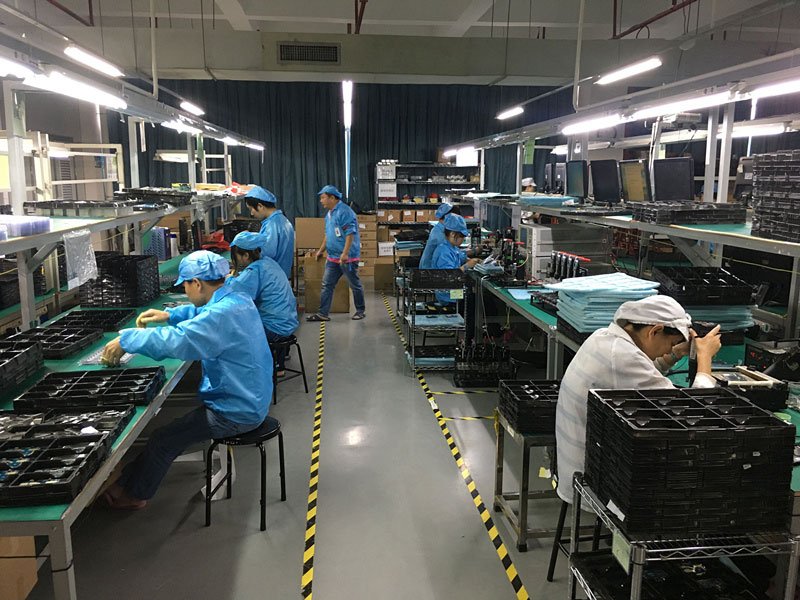
Common defects in the assembly section
The complexity of the injection molding process leads to various defects that can occur during production. These defects are identified through in-process and outgoing inspections at the injection molding plant, as well as incoming material inspections by the user. The following describes common incoming material defects that affect assembly:
1) Deformation: In addition to deformation caused by the injection molding process, the packaging and assembly process can also cause deformation of injection molded parts; care should be taken to avoid stress during packaging and handling, and torque should be controlled according to design requirements during assembly , and operations should be carried out according to the order and operation requirements of the work instructions.
The assembly process of injection molded parts and their mating components may cause deformation and stress on the injection molded parts during assembly due to tolerance fit or deformation of the mating components. If the deformation does not affect its use and reliability, it is acceptable. However, if it may lead to failure in any aspect or poor reliability, assembly should not continue.
2) Appearance: There are many appearance problems caused by the injection molding process, such as shrinkage, flash, sprue marks, burrs, voids, bubbles, etc.; however, appearance problems that occur throughout the entire process from when the injection molded part leaves the factory to when it is assembled on the production line should also be taken into account.
During the packaging, handling, and assembly process, protective measures should be taken to avoid scratches and abrasions . For exterior parts that are at higher risk of scratches, extra protection is needed, such as adding protective films .
During the assembly and handling of injection molded parts, it is important to avoid the impact of grease and dirt on the appearance of the parts, especially exterior parts. Therefore, operators should wear gloves during the operation .
3) Chemical reaction: If the injection molded part material itself and some chemical solvents used in the injection molding process are not cleaned in time or precipitated during use, they may react with other parts after assembly, which may lead to defects in severe cases.
For products requiring potting, the chemicals in the injection molded parts and the potting compound may react, directly causing the potting compound to fail to cure. Therefore, when selecting injection molding materials and potting compounds, it is necessary to confirm with both manufacturers whether they will react with each other.
The samples must be thoroughly verified, and the risk of non-curing can be reduced by cleaning the injection molded parts and allowing them to fully evaporate.
Our Assembly Capabilities
We provide professional assembly services for injection molded components, helping you reduce supply chain complexity and speed up time to market. Whether it’s simple part fitting or multi-component assembly, we ensure precision, consistency, and quality.
- Surface Treatment
- Secondary Processing
- Cleaning & Finishing
- Finished Product Assembly
- Functional testing & inspection
- Custom packaging & kitting
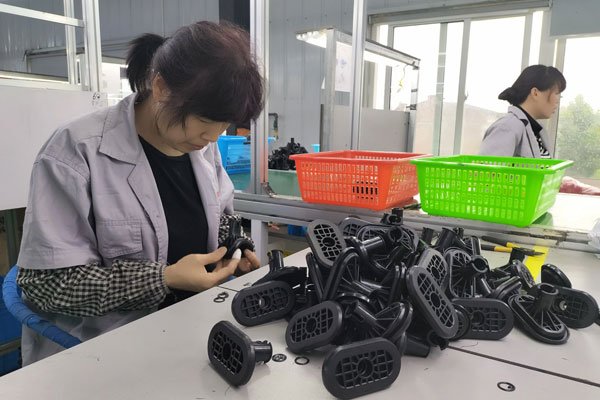
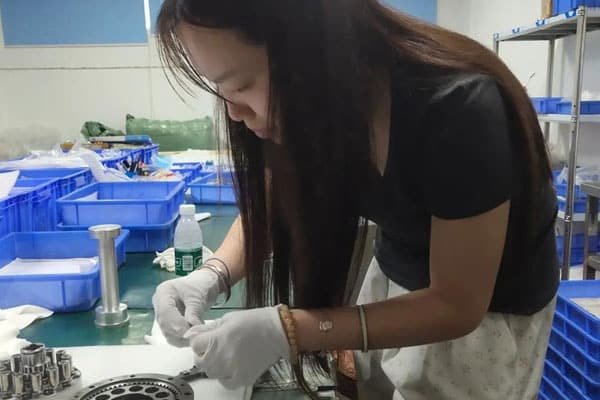
Testing & Quality Inspection
We conduct functional testing and quality checks to ensure every assembled product meets customer requirements.
Testing & Quality Inspection: functional testing (e.g., airtightness testing, power-on testing), 100% full inspection, or AQL sampling inspection.
Why Choose Our Assembly Services
- Reduced logistics costs
- Experienced assembly workers
- Flexible MOQ & fast response
- Strict confidentiality for OEM projects