
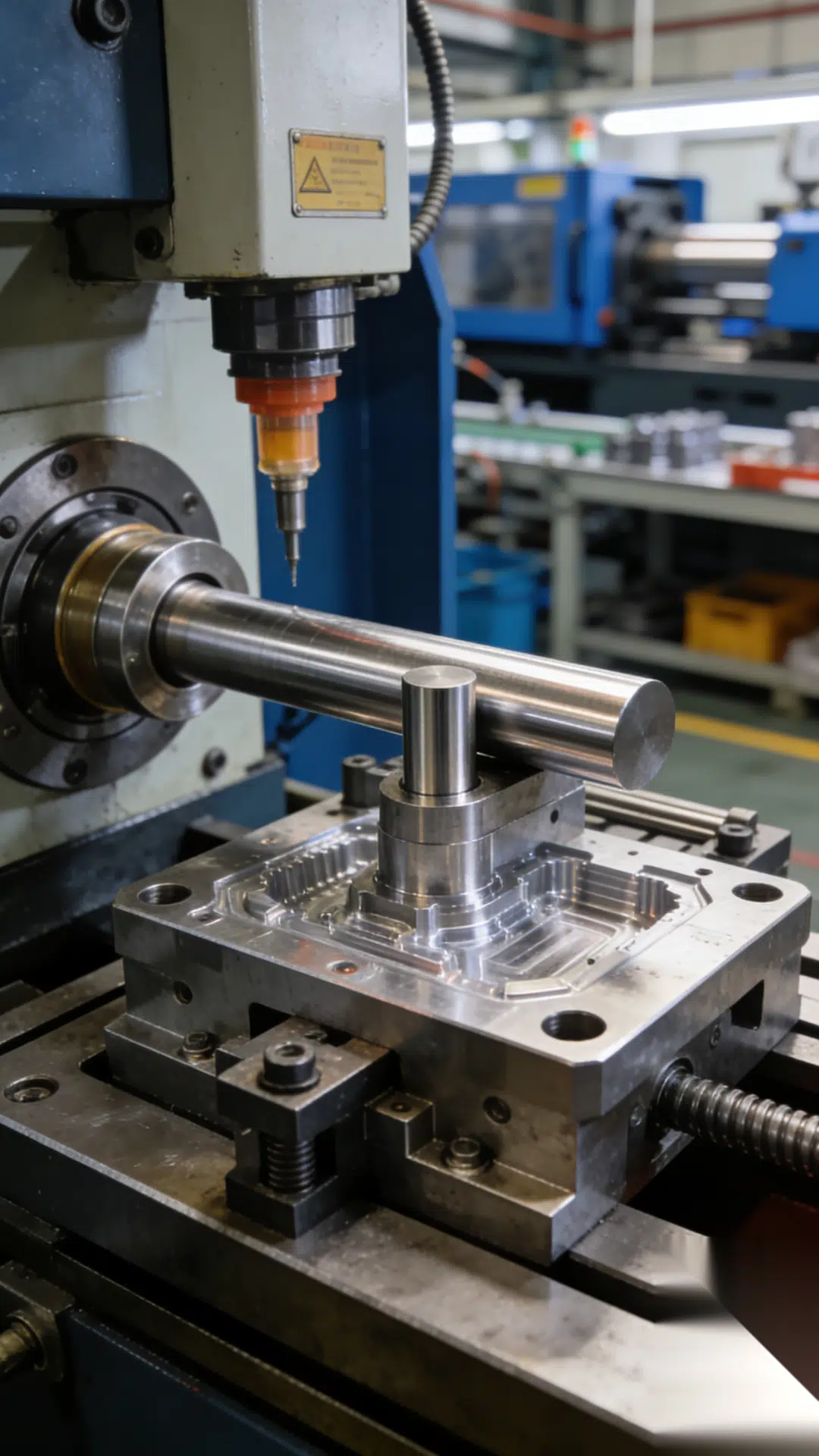
The cavity and core are three-dimensional
The external and internal shapes of plastic parts are directly formed by cavities and cores. These complex three-dimensional surfaces are difficult to process, especially the blind hole internal forming surface of the cavity. If traditional processing methods are used, it not only requires high-level workers, many auxiliary jigs and tools, but also a long processing cycle.
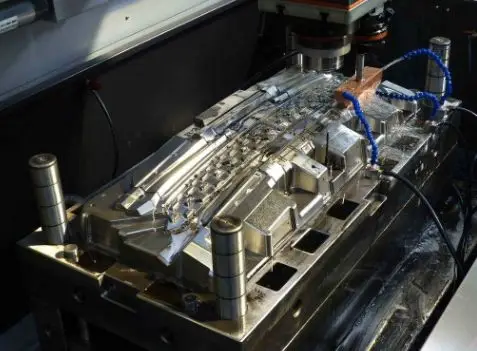
High precision and surface quality are required, as well as a long service life
Currently, the dimensional accuracy requirement for general plastic parts is IT6-7, and the surface roughness is Ra0.2-0.1μm. Correspondingly, the dimensional accuracy requirement for injection mold parts is IT5-6, and the surface roughness is below Ra0.1μm.
The surface roughness of the laser disc recording surface needs to reach the level of mirror finishing (0.02-0.01μm), which requires the surface roughness of the mold to be below 0.01μm. Long-life injection molds are essential for improving efficiency and reducing costs; currently, the service life of injection molds is generally required to be over 1 million cycles.
Precision injection molds require high-rigidity mold frames, increased template thickness, and the addition of support columns or tapered positioning elements to prevent deformation of the mold under pressure. Sometimes the internal pressure can reach 100MPa.
Ejection mechanisms are a crucial factor affecting product deformation and dimensional accuracy; therefore, the optimal ejection point should be selected to ensure uniform demolding. High-precision injection molds often employ modular or fully modular structures, which necessitates significantly improved machining accuracy and interchangeability of mold components.
The process is lengthy and the manufacturing time is tight
For injection molded parts, most are assembled with other components to form a complete product. In many cases, the other components are already completed, and the injection molded parts are eagerly awaiting market launch. Because the requirements for the shape or dimensional accuracy of the product are very high, and because the properties of resin materials vary, repeated trial molding and corrections are required after the mold is manufactured, making the development and delivery time very tight.
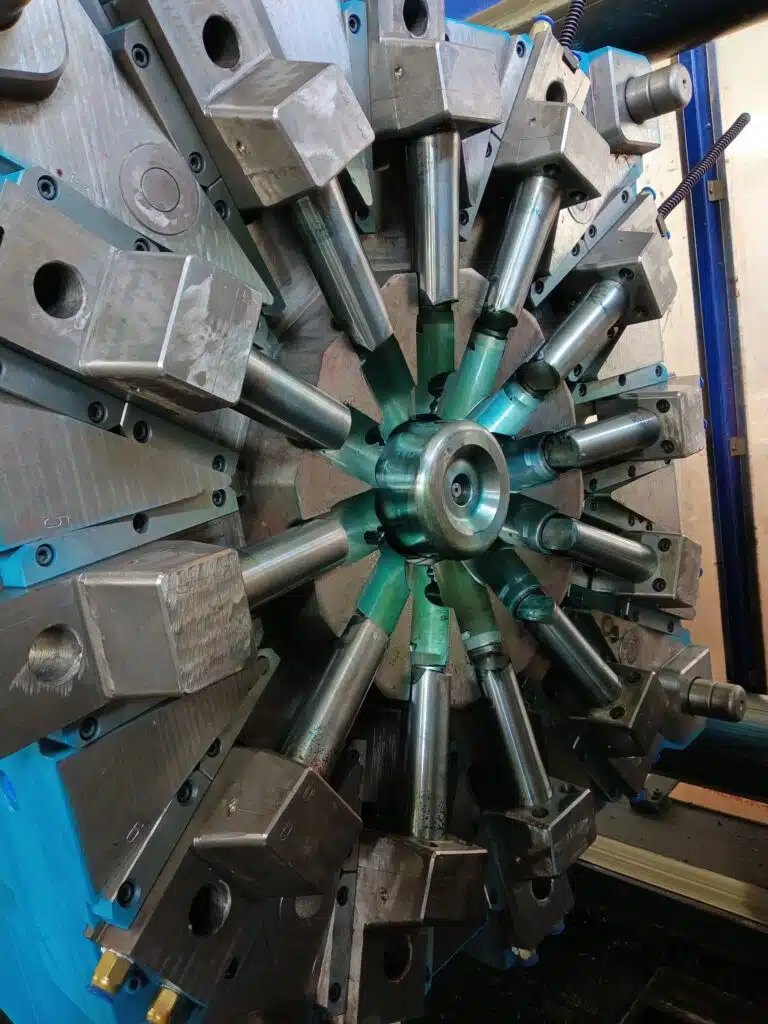
Designed and manufactured in different locations
Mold manufacturing is not the final goal. Instead, the user proposes the final product design, and the mold manufacturer designs and manufactures the mold according to the user’s requirements. In most cases, the injection molding of the product also takes place at another factory. This results in the product design, mold design and manufacturing, and product manufacturing being carried out in different locations.
Specialized division of labor, dynamic combination
Mold production is done in small batches, usually as single-piece production. However, molds require many standard parts, from large mold bases to small ejector pins. These cannot and should not be completed by a single manufacturer. Moreover, the manufacturing process is complex, and the use of ordinary equipment and CNC equipment is extremely uneven.
