
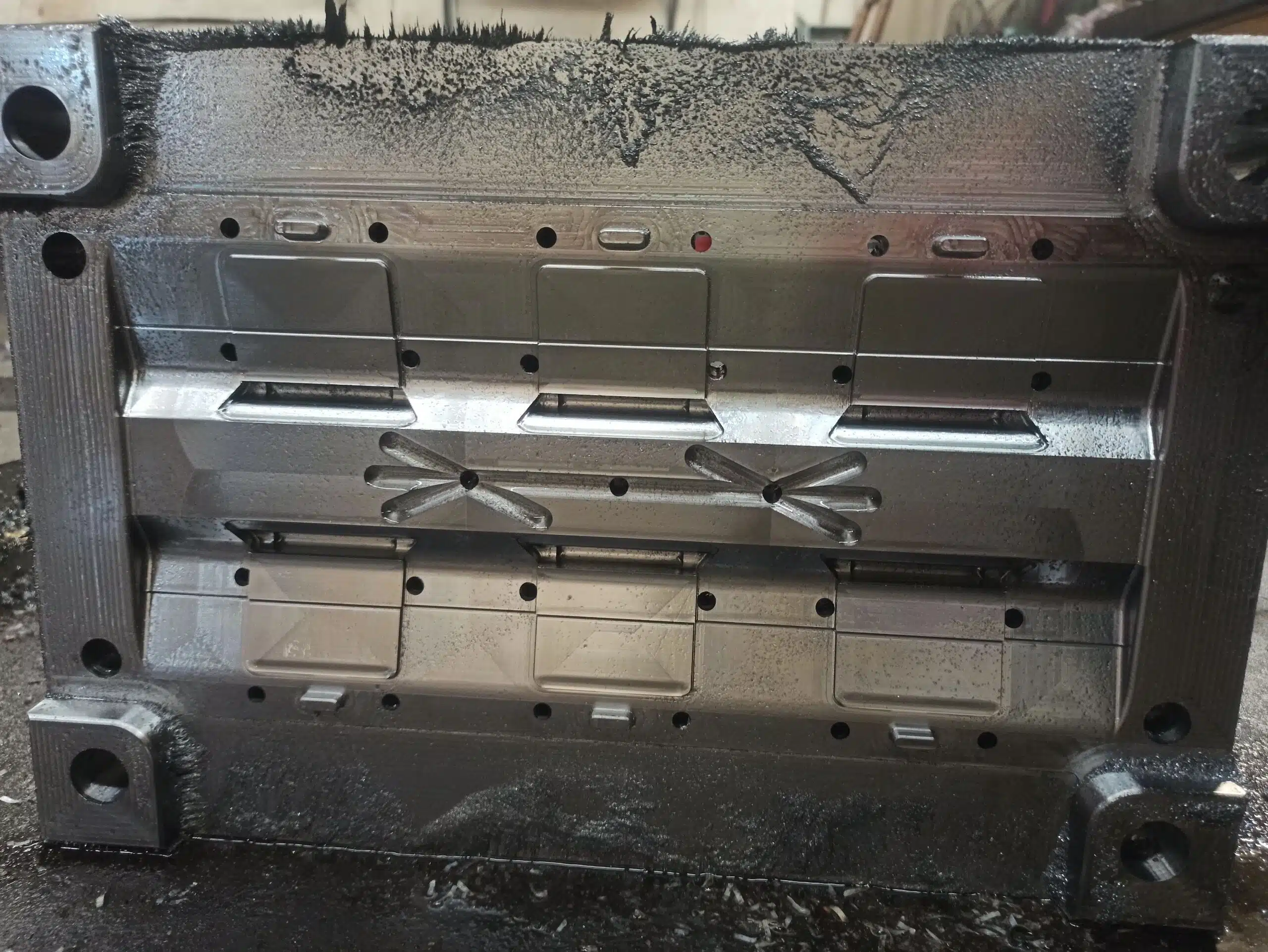
1. Formation of Mold Deposits
Mold fouling occurs during injection molding of almost all thermoplastics. When the functional requirements of the final product necessitate the inclusion of additives (such as modifiers, flame retardants, etc.), these additives are very likely to remain on the mold cavity surface during the molding process, leading to mold Deposits.
There are other reasons for the formation of mold deposits, the most common of which are as follows:
- Thermal decomposition products of raw materials
- During injection molding, the shear force at the extreme points of melt flow
- Improper exhaust
The mold deposits mentioned above are often the product of a combination of different factors, and it is very troublesome to find out what causes these deposits and how to prevent them, and the deposits will take several days to form.
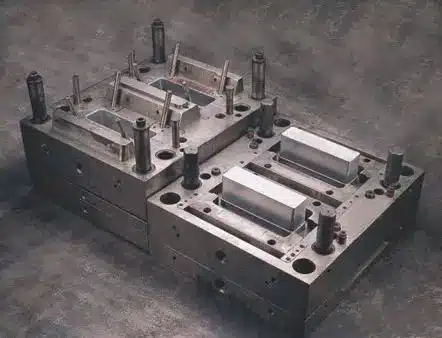
2. Types of Mold Deposits
- Various additives produce specific types of mold deposits. Fire retardants react at high temperatures, decomposing and potentially producing mold fouling products. Impact retardants, under excessively high temperatures or extreme shear forces, can separate from the polymer and remain on the mold cavity surface, forming mold deposits.
- Pigments in thermoplastic engineering plastics melt at high temperatures, reducing the thermal stability of the molding material. As a result, degraded polymers and decomposed pigments combine to form mold fouling.
- For particularly hot parts on the mold (such as the mold core), modifiers/stabilizers and other additives may adhere to their surfaces and cause mold fouling. In this case, measures must be taken to achieve better mold temperature control or special stabilizers must be used.
3. Countermeasures for Suddenly Occurring Mold Deposits
If mold deposits occur suddenly, it may be due to a change in molding conditions or a change in molding materials from a different batch. The following suggestions can help remove mold fouling.
First, measure the melt temperature and visually inspect the melt for any signs of decomposition (such as burnt particles). Also check the molding material for contamination with foreign substances and ensure that the same cleaning agent is being used. Finally, check the venting of the mold.
Next, check the operating machine: Use dye-colored molding material (except black), turn off the injection molding machine after about 20 minutes, remove the nozzle and connector, and if possible, remove them together with the screw. Check the material for burnt particles, compare the material color, and quickly find the source of mold deposits.
Surprising causes of mold fouling defects have been discovered in numerous cases. This technique is best suited for smaller injection molding machines with a maximum screw diameter of 40mm. Eliminating mold fouling also significantly improves part quality when molding other materials. The above measures are also applicable to molding systems with hot runners.
Mold fouling can cause defects in the appearance of injection molded parts, especially parts with surface texture. These defects can be repaired by sandblasting.
4. Mold maintenance
If mold fouling cannot be eliminated using all the above measures, the mold must be properly maintained and cared for.
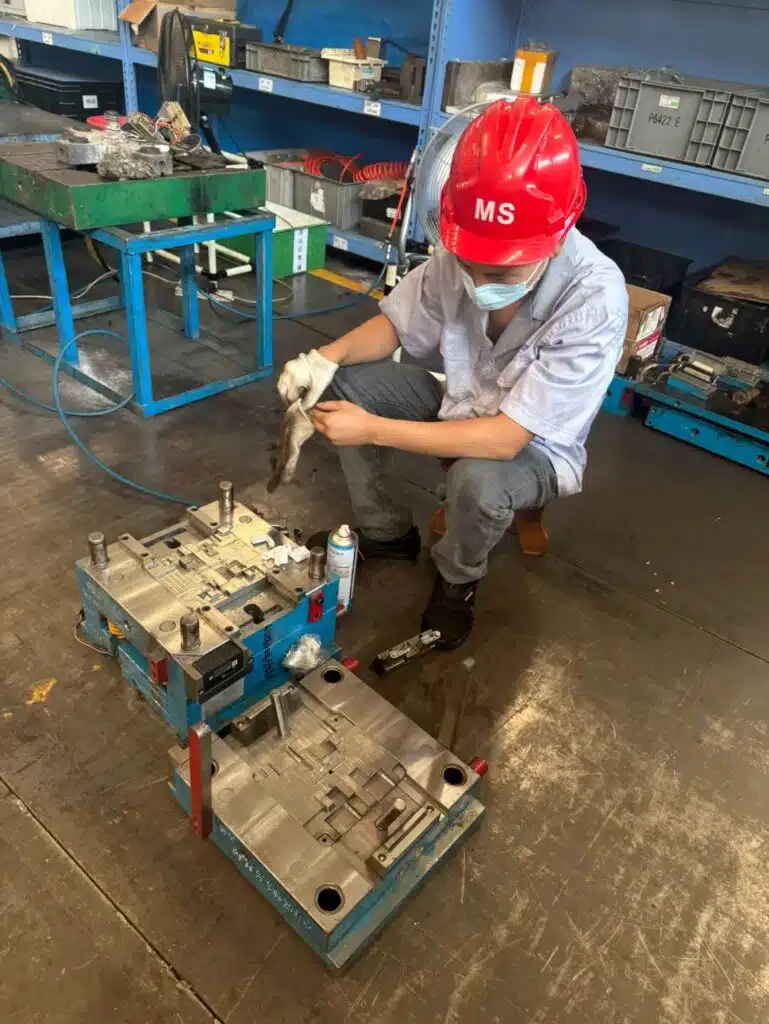
Initially, mold fouling on the mold surface is relatively easy to remove; therefore, mold cavities and venting channels must be cleaned and maintained regularly (e.g., after each batch of molding production). If mold maintenance is neglected for an extended period, a thick layer of mold fouling can form, making removal very difficult and time-consuming.
The sprays used for injection mold maintenance and upkeep mainly include: mold release agent, rust inhibitor, ejector pin oil, adhesive residue remover, mold cleaner, etc.
Model sludge has a very complex chemical composition, requiring the use and experimentation of new methods for removal, such as common solvents and various special solvents, oven sprays, and caffeinated lemon water. Alternative and unusual methods include using rubber specifically designed for cleaning model tracks.
5. Recommendations for preventing mold deposits
When using hot runner molding and heat-sensitive raw materials, the melt residence time will be longer, thereby increasing the risk of raw material decomposition and mold fouling. The injection molding machine screw should be cleaned.
When molding raw materials that are sensitive to shear force, use larger runners and gates. Multiple gates can reduce flow distance, lower injection speed, and reduce the risk of mold fouling.
Efficient mold venting can reduce the likelihood of mold fouling. Appropriate mold venting should be incorporated during the mold design phase. Automatic venting systems or venting methods that easily remove mold fouling are the best choice, and improvements to venting systems often result in reduced mold fouling.
Applying a special non-stick coating to the mold cavity surface can prevent mold fouling; the effectiveness of the coating should be tested and evaluated. Titanium nitride treatment of the inner surface of the mold can also prevent mold fouling.
