
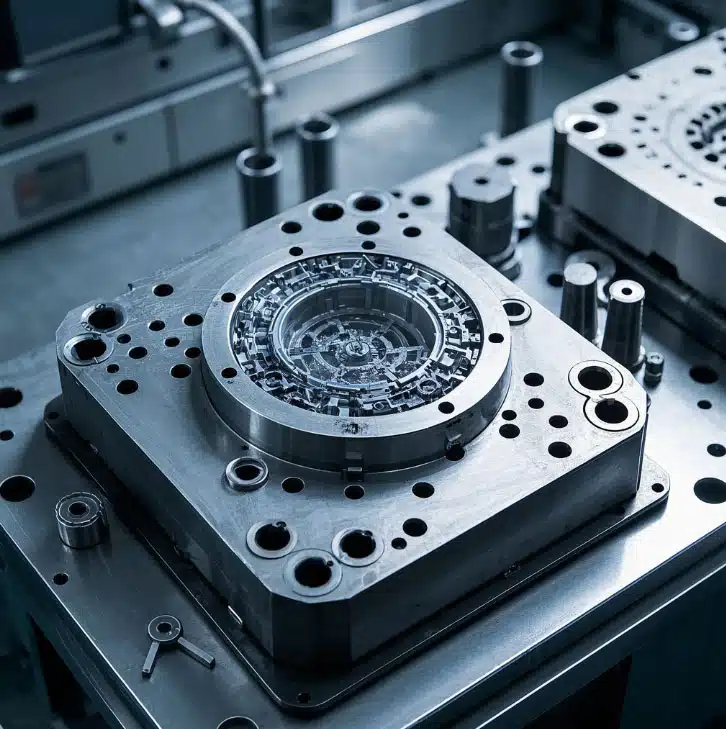
Intro
When designing structures, have you ever been confused by terms like “two-shot molding”, “overmolding”, and “insert molding” ?
Some people say that overmolding is the same as insert molding, while others confuse two-shot molds with overmolding, leading to the wrong solution when opening the mold, either costing hundreds of thousands more or causing problems during mass production.
Today, we’ll explain the differences between these three aspects from four core dimensions: mold structure, process logic, implementation cost, and applicable scenarios, using the simplest language possible. It’s all practical information that can be directly applied, so we recommend saving it for future reference!
First, understand why there are these three types of molds
Essentially, they all aim to solve the molding requirements of “multi-material / multi-color plastic parts” —for example, buttons need a soft rubber feel + a hard rubber body, shells need two-color decoration, and metal bushings need to be covered with plastic for scratch protection.
The core differences lie in:
- Using one mold or two molds?
- Requiring specialized equipment or standard equipment?
- Forming in one step or multiple steps?
Once you understand these three questions, you can easily distinguish all types.
II. Two-color mold: The “King of One-Step Molding” – High Cost and High Precision
Core Principle: One Mold + Two-Shot Machine = Finished Product in One Cycle
A two-shot mold is an integrated mold system that must be used with a dedicated two-shot injection molding machine. The mold itself features a 180° rotating core or mold plate. After clamping, the first plastic material is injected. Then, the core rotates 180°, and the second plastic material is injected. The entire process is automated, requiring no manual intervention or robotic part removal and transfer between molds.
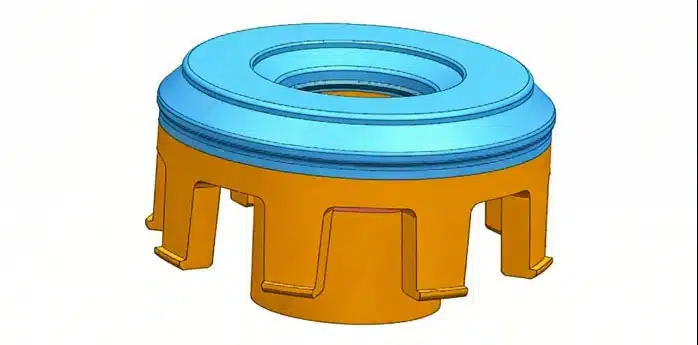
Key Features Engineers Must Remember
Mold costs are extremely high: Typically 2–3 times higher than that of overmolding molds. Tooling costs can easily reach hundreds of thousands, and subsequent modifications are both difficult and expensive.
High Equipment Requirements: Requires a dedicated two-shot injection molding machine (featuring two barrels and two nozzles). Not all manufacturing facilities are equipped with this specialized machinery.
High Molding Precision: Parts are formed in a single molding cycle, resulting in a seamless appearance with no parting lines or witness marks. The bond between the two plastics is exceptionally tight.
Material Limitations: Only suitable for bonding “molten plastic to molten plastic.” It cannot accommodate pre-fabricated inserts and is therefore not applicable for “plastic over metal” applications.
Typical Applications: Ideal for high-volume, high-precision two-color components, such as dual-color buttons, two-tone decorative trims, and the dual-color sections on premium toothbrush handles.
Advantages vs. Disadvantages
Advantages: Extremely high efficiency, extremely high precision, perfect appearance, suitable for mass production of tens of millions;
Disadvantages: High cost, high barriers to entry, poor flexibility, and not cost-effective for small-batch production.
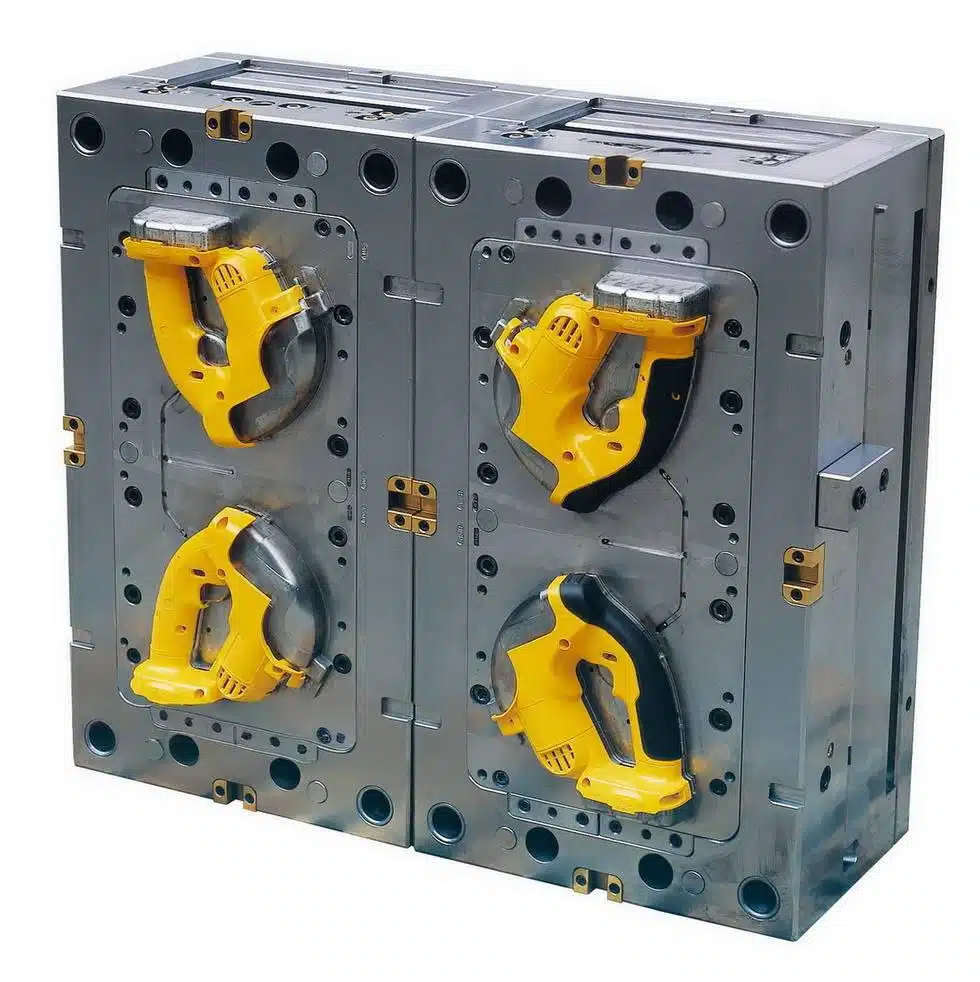
III. Overmolding/Insert Molding: The King of Cost-Effectiveness, the First Choice for Structural Design
Known as “overmolding” or “insert molding”, both are fundamentally two-step molding processes and the most widely used multi-material molding solutions in the industry.
Core Logic: Two Molds + Standard Machine, Two-Step Molding
This method utilizes two independent single-material molds paired with standard single-shot injection molding machines (one or two machines can be used). The process is completed in two steps:
steps:
Step 1: Use the first mold to stamp out the hard plastic main body (or metal inserts, this is the core step!).
Step 2: Place the hard plastic body/metal insert into the cavity of the second mold, then insert soft plastic/the second type of plastic to wrap the body and complete the molding.
Key Features Engineers Must Remember
- Low cost and high flexibility: The total price of two single-color molds is much lower than that of one two-shot mold. Only one mold needs to be modified. Trial production and small-batch production are both possible.
- The equipment is highly versatile: it can be used with ordinary single-color machines, which are available in almost all injection molding plants, making the entry barrier extremely low;
- Wide range of applications: It can be used to make both “soft rubber covering hard rubber” (such as soft rubber anti-slip layer on handles) and “plastic covering hardware” (such as rubber covering metal screws), which is something that two-color molds cannot do;
- Strong bonding: The soft rubber melts and wraps around the hard rubber/hardware, plus the structural buckles, resulting in a stronger bonding than the two-color mold and making it less likely to fall off;
- Minor appearance flaws: There may be slight positioning errors during secondary placement, resulting in some glued mold lines on the exterior, which generally do not affect use.
Advantages vs. Disadvantages
Advantages: Low cost, low barrier to entry, wide applicability, can solve 90% of multi-material molding needs, making it the first choice for structural design;
Disadvantages: Lower efficiency than two-color molds, requiring manual or robotic assistance for picking up and placing parts.
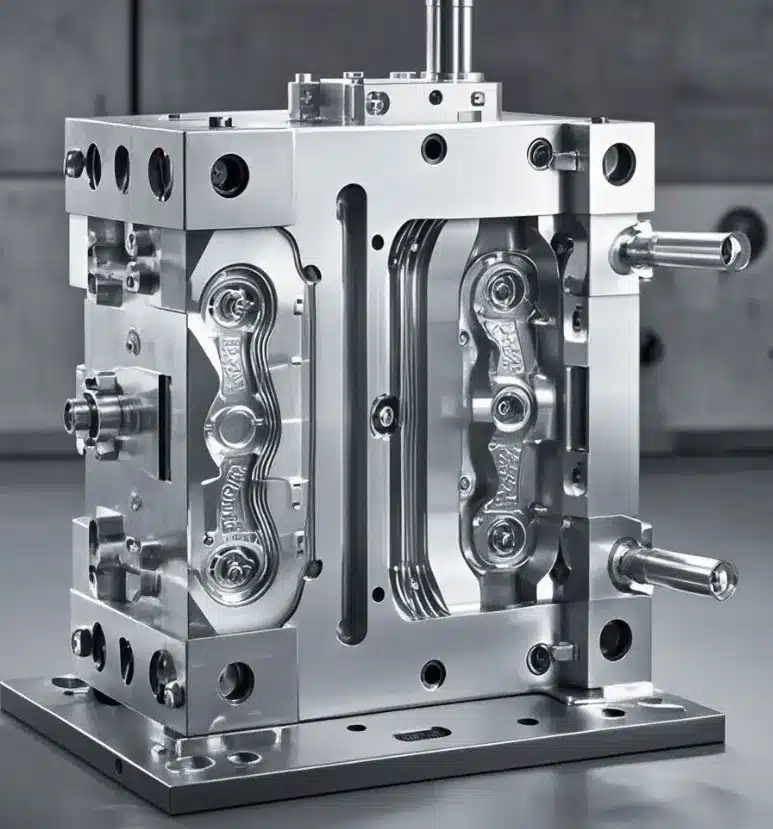
IV. Core Comparison Table: A Clear Guide to Choosing the Right Solution
| Dimension of Comparison | Two-Shot Molding | Overmolding / Insert Molding |
|---|---|---|
| Mold Structure | A single integrated mold with a rotating mechanism | Two independent single-material molds, no rotating mechanism |
| Injection Equipment | Dedicated two-shot machine (high barrier) | Standard single-shot machine (low barrier) |
| Molding Steps | Single clamping cycle, fully automated | Two-step process, requires part transfer between molds |
| Core Capability | Plastic + Plastic bonding only | Plastic + Plastic / Plastic + Metal bonding |
| Cost Level | High (both tooling and production costs) | Low (both tooling and production costs) |
| Suitable Production Volume | Very high volume (millions) | From low volume to high volume (up to millions) |
V. Avoiding Pitfalls: 3 Ironclad Rules of the Industry
1. If you can choose a set of overmolds, don’t choose a two-shot mold
Unless it’s a high-volume, precision-engineered part with extremely high appearance requirements, overmolding offers far better cost-effectiveness than wo-shot molding.Often, what a two-shot mold can produce, an overmold can achieve as well—albeit at a slightly lower efficiency but it can save over 50% in costs.
2. Metal Inserts Mandate Overmolding
Two-shot molding cannot achieve “plastic over metal.” If the product requires metal inserts (such as bushings, screws, and frames), just choose the overmolding (insert molding) without hesitation.
3. For frequent trial production/mold modifications, prioritize Overmolding
In the early stages of product development, mold modifications are common. Modifying an overmold typically requires adjustments to only one of the two molds, resulting in lower costs and shorter lead times. Modifying a two-shot mold involves altering its complex rotating mechanism, which is not only more expensive but also causes significant delays.
VI. Quick Selection Formula (Direct Application)
- Requirements: Two-color scheme, no soft rubber, tens of millions of batches, ultimate appearance → Choose two-color mold;
- Demand: Soft rubber covering hard rubber, plastic covering metal, small batch/trial production, frequent mold changes → Select Overmolding/Insert Molding;
- Requirements: Cost priority, quick implementation, and universal applicability → Select Overmolding/Insert Molding.
Finally, one more thing: there is also a “three-shot molding” in the industry, which is essentially an upgraded version of the two-shot molding. It features an additional rotating station in the mold and an extra barrel on the injection machine. The principle is exactly the same as the two-shot mold, so there is no need to memorize it.
