
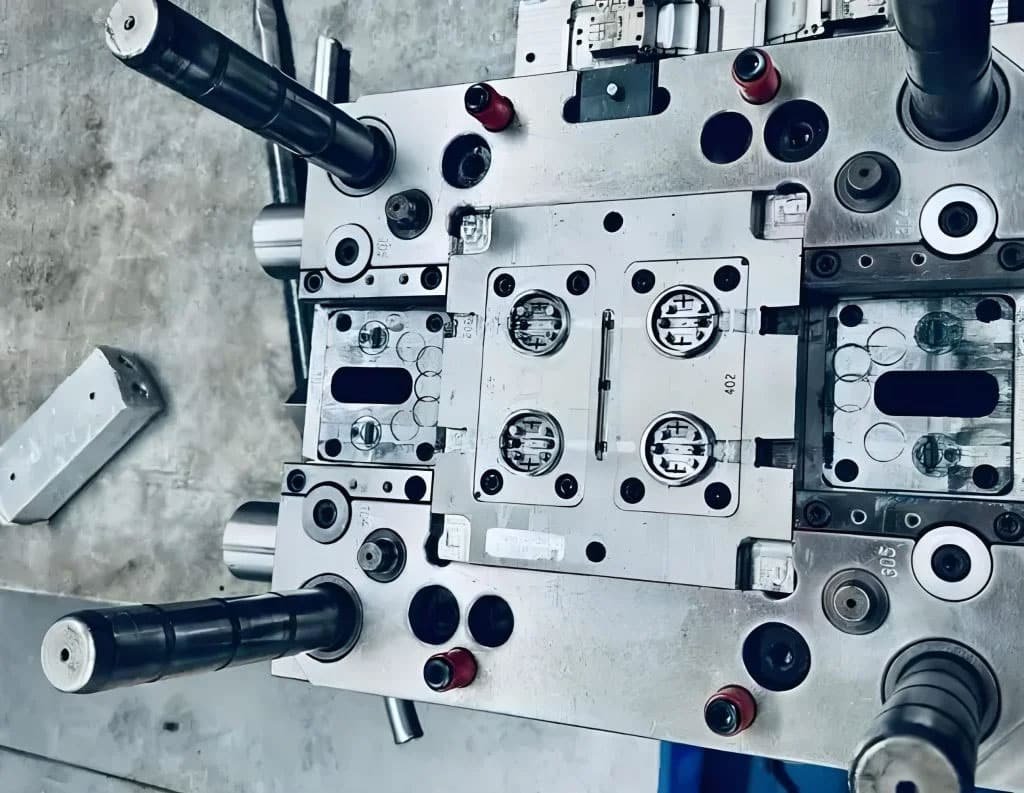
Venting of injection molds is an important issue in mold design, especially in rapid injection molding, where the requirements for venting of injection molds are even more stringent.
(1) Sources of gas in injection molds
1) Air present in the gating system and mold cavity.
2) Some raw materials contain moisture that has not been dried and removed, which vaporizes into water vapor at high temperatures.
3) Gases produced by the decomposition of certain unstable plastics due to excessively high injection molding temperatures.
4) Gases generated from the volatilization or chemical reactions of certain additives in plastic raw materials.
(2) Hazards of poor exhaust
Poor venting in injection molds can cause a series of problems, including negative impacts on the quality of plastic parts. The main issues are as follows:
1) During the injection molding process, the melt will replace the gas in the cavity. If the gas is not discharged in time, it will cause difficulty in filling the melt, resulting in insufficient injection volume and failure to fill the cavity.
2) Poorly expelled gas will create high pressure in the mold cavity and, under a certain degree of compression, seep into the plastic, causing quality defects such as air holes, voids, loose structure, and silver streaks.
3) Due to the high compression of the gas, the temperature inside the mold cavity rises sharply, causing the surrounding melt to decompose and burn, resulting in localized carbonization and scorching of the plastic part. This mainly occurs at the confluence of two melt streams, corners, and gate flanges.
4) Poor gas removal results in different melt velocities entering different cavities, which easily leads to flow marks and weld lines, and reduces the mechanical properties of the plastic parts.
5) Due to the obstruction of gas in the cavity, the filling speed will be reduced, affecting the molding cycle and reducing production efficiency.
(3) Distribution of air bubbles in plastic parts
The sources of gas in the mold cavity are mainly divided into three categories: air accumulated in the mold cavity; gas produced by the decomposition of raw materials; and water vapor from the evaporation of residual water in the raw materials. Due to the different sources, the positions of the bubbles are also different.
1) Air bubbles generated by air accumulation in the mold cavity are often distributed in the part opposite to the gate.
2) The bubbles generated by the decomposition or chemical reaction in the plastic raw material are distributed along the thickness of the plastic part.
